
An Indian who used the services of Mumbai-based immigration offices of terror suspects David Headley and Tahawwur Rana has been deported by US authorities to India after his documents were allegedly found to be false. The person (name withheld) hailing from Gujarat arrived at the Indira Gandhi International Airport in Delhi early on Thursday morning, airport sources said.
Stung by the controversy over issuance of visa to terror suspect Tahawwur Rana, the government has decided to link all offices dealing with providing travel documents to foreigners to ensure sharing of information on a real-time basis.
Ajmal Kasab was hanged, but there are four other trials that need to be expedited to bring the real masterminds of the 26/11 attacks to justice. Vicky Nanjappa reports
Agencies probing the 26/11 case will seek voice samples of David Headley and Tahawwur Rana -- the terror suspects -- from the Federal Bureau of Investigation to ascertain the duo's role in the Mumbai terror attacks.
Some Indians living in Karachi were willing to work with the Lashkar-e-Tayiba to carry out terror attacks in India, David Headley has said, apparently referring to underworld don Dawood Ibrahim, who is based in the port city of Pakistan.
Marking their second meeting in four months, foreign secretaries of India and Pakistan will hold two-day talks in Islamabad from June 23. The Indian side is expected to press for effective action against those behind the 26/11 attacks, including elements in the Inter-Services Intelligence.
Justifying a controversial deal with Mumbai terror attacks accused David Headley that spared him from the death penalty and extradition to India, a top United States attorney on Friday said that not making the pact would have been a "terrible mistake".
Pakistan Prime Minister Yousuf Raza Gilani had attended the funeral of Mumbai attacks accused David Headley's father in 2010. This was disclosed by 50-year-old Headley at a Chicago court during the trial of co-accused Tahawwur Rana in the 26/11 attacks case.
An officer in Pakistan's intelligence service chose a Jewish centre as a target for the 2008 Mumbai attacks and then helped launch a new plot against Denmark, according to the star witness in a terror trial in Chicago. In his second day of testimony, David Coleman Headley, a confessed Pakistani-American terrorist, revealed more details about close ties between Pakistan's Inter-Services Intelligence Directorate and the Lashkar-e-Tayiba terror group.
The mysterious Major Iqbal, who India suspects is a Pakistani army officer in the Inter-Services Intelligence, has now been identified as Chaudhery Khan by Mumbai terror accused David Headley. Headley also confirmed that Khan was the mastermind of the 26/11 attacks.
Although LeT operative David Coleman Headley says nothing new in his recent confession in a US court that Pakistani ISI helped Lashkar-e-Tayiba execute the 26/11 terror strikes in Mumbai, it still vindicates India's stand, reports Vicky Nanjappa.
Law enforcement sources rubbished allegations that Headley was a double agent for US intelligence and that this was why he was not being made available for interrogation by Indian intelligence.
Headley's trial thus promises to be fascinating and important. If it is established that Headley was working for Headley all along, it will establish the Mumbai terror attacks as being a joint Lashkay-Al Qaeda operation, says Riedel. This, if true, is bad news for American counter-terrorism ops given the Lashkar's global network of supporters the Pakistani diaspora
India said it was awaiting further information from the US with regard to probe against suspected Lashkar operatives David Coleman Headley and Tahawwur Rana arrested in Chicago in October. The FBI revealed to India two weeks ago that the LeT were linked to the Mumbai attacks.
The Union home ministry believes the newly-formed National Investigation Agency will have to reinvestigate the 26/11 case if the David Headley-Tahawwur Rana probe produces unexpected links with the Mumbai terror attacks. This will be a serious matter and hit the Mumbai police's credibility.
A United States court on Wednesday allowed media outlets access to parts of the video tapes, which were played during the trial of Lashkar-e-Tayiba operative David Headley's childhood friend and 26/11 attacks co-accused Tahawwur Rana.
Lashkar-e-Tayiba operative David Headley wants his five-year-old son to one day become a soldier in Pakistani army's elite Special Service Group, which is known for its anti-India operations. Headley, who was the star government witness in the Chicago trial of his childhood friend Tahawwur Rana in June, had been grooming his son.
Oberoi hotel, one of the sites attacked during the 2008 Mumbai terror attack, was not originally on the list of targets for surveillance given to David Headley by his Inter Services Intelligence handler. But the Lashkar-e-Tayiba operative made a video of it after filming Chabad House as he had an hour to spare before he could catch a movie.This was revealed by the LeT operative in his testimony before a Chicago court during co-accused Tahawwur Rana's recently-concluded trial.
As the Tahawwur Rana trial draws to a close, there will always be a big question mark on the one man who got away during this entire proceeding. Muzamil Bhat, who today without a doubt, is one of the biggest operatives in the Lashkar-e-Tayiba has been given a miss.
While Pakistani handler Sajid Mir and ISI's Major Iqbal are both in the dock in the Chicago court where Tahawwur Rana is being tried for his role in the 26/11 terror attacks, Mir remains Pakistan's biggest worry. Vicky Nanjappa reports.

Here are the revelations made by Headley so far in the deposition
US prosecutors have filed a memorandum, opposing the bail petition of terror suspect Tahawwur Hussain Rana, charged with plotting terror attacks in India and Denmark.
Security expert B Raman deciphers the FBI affidavit against Tahawwur Hussain Rana, the Pakistan-origin Canadian arrested with David Headley for alleged Lashkar connections, and speculates who could be their handlers in Pakistan.
The verdict on Tahawwur Hussain Rana is expected by Wednesday. While India is eagerly awaiting the Chicago court's decision, investigators have chalked out a plan to ensure that a strong case is prepared against Pakistan and its Inter-Services agency in the 26/11 case. India may also push for Rana's extradition. Vicky Nanjappa reports
Despite fervent efforts to depict Tahawwur Hussain Rana as a man of peace and a reader of Muhammad Iqbal's poetry, a Chicago judge refused to grant 48-year-old Rana bail, on Wednesday, and slated December 16 for a response from the government.
The key to the conspiracy hatched by David Headley and Tahawwur Rana may lie in Bangladesh and Pakistan.
A Chicago court has adjourned the hearing on the bail application of Tahawwur Hussain Rana, one of the two LeT operatives nabbed by FBI in October on charges of plotting a major terror attack against India, till December 15.
However, Rana's lawyer Patrick Blegen has said in a new motion filed in a Chicago court that as a result of FBI raids on Rana's businesses and his detention, his businesses have effectively been shut down and are worth nowhere near what they were previously estimated. According to court filings, Rana allegedly conspired to bring foreigners to the US under false pretences.
A United States lawyer representing Tahawwur Hussain Rana, an accused in the Mumbai terror attacks, has said that the Pakistani-Canadian has been "betrayed" by his friend David Headley.
Pakistan-born Canadian terror suspect Tahawwur Hussain Rana is expected to be indicted this week as federal prosecutors in Chicago face a 14 January deadline to file the indictment that may include additional charges resulting from the Mumbai terror attack.
The bail plea of Tahawwur Hussein Rana, who faces possible life sentence for involvement in the 26/11 Mumbai attacks, has been opposed by federal prosecutors in a Chicago court, which asked the Pakistani-Canadian Lashkar-e-Tayiba operative to respond to this by January 20.
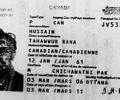
Before he became a diplomatic concern, Rana advertised himself as a 'world-famous immigration consultant'. That was last year when the Pakistani-Canadian businessman was just an 'unknown' father of three, who worked out of Chicago while keeping a house in an Ottawa suburb. Before he became a diplomatic concern, Rana advertised himself as a 'world-famous immigration consultant'. That was last year when the Pakistani-Canadian businessman was just an 'unknown' father of three.
During opening statements at Chicago's Dirksen Federal Building, Assistant US Attorney Sarah Streicker said that Rana, a Pakistani-Canadian, told Headley, an American of Pakistani origin, after the Mumbai carnage in which 166 persons were killed in November 2008 that the "Indians deserved it."

A Pakistan-born Canadian citizen, Rana, along with David Coleman Headley, was arrested by the Federal Bureau of Investigation last month on charges of plotting terrorist attacks in India and Denmark. Rana's detention hearing before Magistrate Judge Nan R Nolan has been moved to December 2 at the joint request of the parties, a court official said.
The verdict in the trial of Tahawwur Hussain Rana, co-accused in the Mumbai terror attacks with David Coleman Headley, is likely to come in earlier than expected as the Chicago businessman is unlikely to testify at his own trial. Rana's attorney Patrick Blegen said his client's defence team was still making a final decision, but that it was unlikely Rana would take the stand.
The trial of Pakistani-Canadian Tahawwur Hussain Rana who is accused with David Coleman Headley for the 2008 Mumbai terror attacks began in Chicago on Tuesday.
Pakistani-American Leashkar-e-Tayiba operative David Coleman Headley on Tuesday said that he made a "fool" of Tahawwur Husssain Rana by involving him in the 26/11 Mumbai attack conspiracy.
The trial of Pakistani-Canadian Tahawwur Hussain Rana, which began in Chicago on May 17, has witnessed its share of explosive revelations by prime witness David Coleman Headley.Both Rana and Headley are allegedly operatives of the Lashkar-e-Tayiba and had planned the terror strike in Mumbai along with the leaders of the terror outfit.Rana, a 50-year-old Chicago businessman, has been charged with planning the attacks, providing material support to the LeT.
Pakistani-Canadian terror suspect Tahawwur Hussain Rana, charged with involvement in the Mumbai attacks, will stick to his 'not guilty plea' unlike his co-accused and childhood friend David Coleman Headley, who confessed to plotting the 26/11 strikes.
Attorneys of Pakistani-Canadian Tahawwur Hussain Rana, who was convicted on Thursday by a United States court for providing material support to the Lashkar-e-Tayiba and helping plan a terror plot in Denmark, said they would appeal against the verdict as there was an error in the trial. Rana's attorney Patrick Blegan said he would file post-trial motions, claiming there was not enough evidence to convict him and there was an error in the trial.
 © 2026 Rediff.com - Investor Information - Advertise with us - Disclaimer - Privacy Policy - Sitemap - Feedback - About us - Terms of use - Grievances